
Overcoming Discouragement & Distraction As An Artist
by Julie deBoer
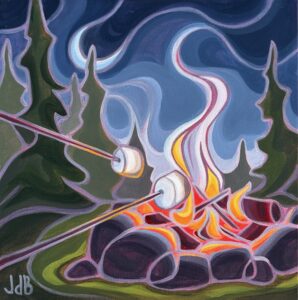
“Toasty Warm” 12×12 by Julie deBoer
How to Stay Focused, Resilient, and Committed to Your Creative Journey
Every artist knows the struggle: the quiet frustration of a failed piece, the subtle tug of everyday distractions, the dream that sometimes feels just out of reach. Discouragement and distraction are two of the most common obstacles creatives face – and when they show up at the same time, it can feel like a perfect storm.
The good news? You can overcome both. And once you learn how to flip your perspective, these challenges can actually strengthen your artistic practice instead of derailing it.
The Truth About Discouragement
Every artist has a pile of misfits—and they matter more than you think.
Let’s begin with discouragement. Every artist – every single one – has a collection of “misfits.” These are the pieces that didn’t turn out, that drifted off course halfway through, that never got signed, framed, or sold. They live in closets, storage bins, basements, and dark corners. You may even have a few hanging in a friend’s home—works you don’t love but they somehow adored – and now you see them every time you visit.
That sting is familiar to nearly all creatives. But here’s the shift: eventually, you start to see those pieces differently. Each misfit is a record of your courage. A marker that you showed up, experimented, tried something bold, or pushed through resistance. These pieces tell the story of your growth.
Discouragement isn’t failure – it’s evidence that you’re putting in the hours. Artists often say there are no failures in art, only lessons. Those unfinished, imperfect works are milestones. They’re hours of dedication logged into your journey. They whisper: I tried. I learned. I kept going.
The Real Creative Enemy: Distraction
It’s quiet, subtle, and far more dangerous than discouragement.
While discouragement can deflate your confidence, distraction does something far more damaging: it stops your progress altogether. The tricky thing? Distraction rarely shows up looking like the enemy. It disguises itself as:
- One more obligation
- One more helpful favor
- One more opportunity
- One more task you’ll “just squeeze in” before heading to the studio
And before you know it, the entire day is gone. Distraction convinces you that everything else is urgent… except your art. But here’s the truth: Discouragement is part of the process—distraction is what derails it.
When you mistake distractions for necessities, you unintentionally undermine your creative purpose. Your art matters. Your creativity has meaning. You are meant to pursue it—boldly and consistently. And yes, you have a responsibility to the gift you’ve been given.
How to Flip Your Perspective
Discouragement teaches you. Distraction steals from you.
Discouragement makes you doubt yourself, but it also teaches resilience, patience, and humility. Your misfits teach you more than your masterpieces ever will. Distraction, on the other hand, pulls you away from the work entirely. It’s the one force that can stop your growth if you don’t catch it early. The key is recognizing both quickly—and choosing your dream anyway. As Brendon Burchard said: “Your dream has to be bigger than the distraction and discouragement you face.” It’s not easy, but it is possible.
How to Stay On Track in Your Creative Practice
Here’s what to do this week to strengthen your focus and rekindle your artistic momentum:
1. Look at your misfits with appreciation, not shame
They are proof of your persistence and passion. They show you tried. They show you grew.
2. Identify your distractions—and say no to them
Not everything that looks important is important. Protect your studio time like the treasure it is.
3. Reframe your discouragement
Thank it for the lessons. Let it be a sign of effort rather than inadequacy.
4. Return to your work
Your art is waiting for you. It cannot create itself—it needs your hands, your heart, and your presence. Even when progress feels slow. Even when distractions feel easier. Even when discouragement feels heavy. You were made for this. Truly. Your art needs you – keep going.
This really spoke to me Julie. Thank You.
Thank you for this. ❤️
This definition of discouragement and of distraction…very well put. Really helped me. Thank you.
Look at your misfits with appreciation. I like that. All those misfits have a place. So good. Thank you Julie!