
From Copying to Creating
How to Use Reference Photos Without
Losing Your Artistic Voice
By Julie deBoer
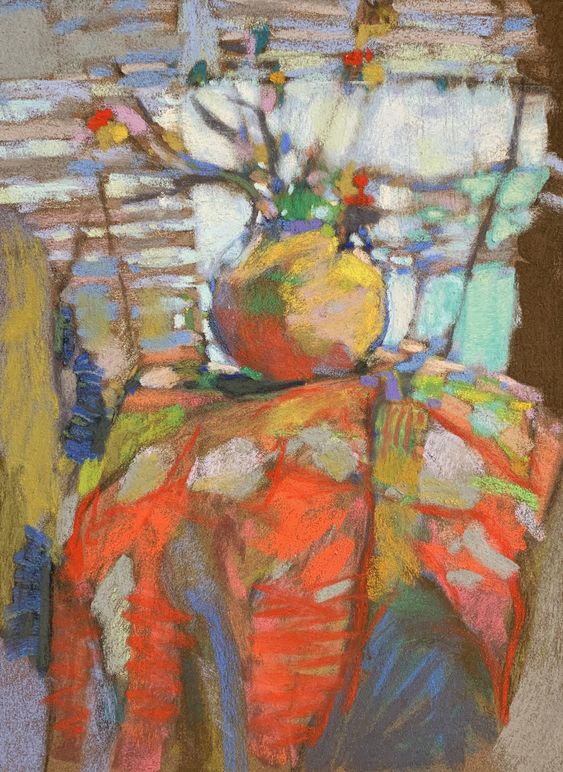
Artwork by mentor Casey Klahn
Art is not a copy of something that already exists.
It’s an entirely new creation.
Have you ever felt tethered to a reference photo? Like you want to break free from it but you don’t know how?
It’s a common experience for artists. We can easily find ourselves lost in the weeds, pulled into tiny details, creatively stifled, and unsure how to move from simply copying a photo to truly creating something of our own.
Reference photos are incredibly helpful tools, but if we’re not careful they can start to hold us back. Photos flatten light, miss atmosphere, and can never fully capture the emotion we felt when we stopped and took the photo in the first place.
Reference photos tempt us to believe that accuracy is the goal, but what truly brings art to life is YOUR INTERPRETATION.
That’s how your art becomes set-apart and uniquely yours.
What if, instead of tying us to “what is,” a photo became the springboard into “what could be”?
Use reference photos as a SPRINGBOARD.
Not a crutch.
When I first started painting, I relied heavily on reference photos. But I quickly became frustrated. Photos rarely captured the feeling of the moment or the vibrant color that drew me to the scene in the first place.
I tried combining multiple photos, one for the subject, another for the lighting, and another for the color palette, but that quickly became too complicated. Eventually I swung to the other extreme and abandoned reference photos altogether, letting my imagination take me to whimsical places of color and expression.
Now I’ve found a balance. I use reference photos when I need them, often to research a subject, then lean on my interpretation, the meaning I want to convey, and a healthy dose of imagination to bring it all together.
The truth is, it’s a journey for every artist. We’re always evolving, learning what works for us and what doesn’t. So give yourself grace as you grow, and stay mindful of the limitations of reference photos as you develop your own artistic voice.
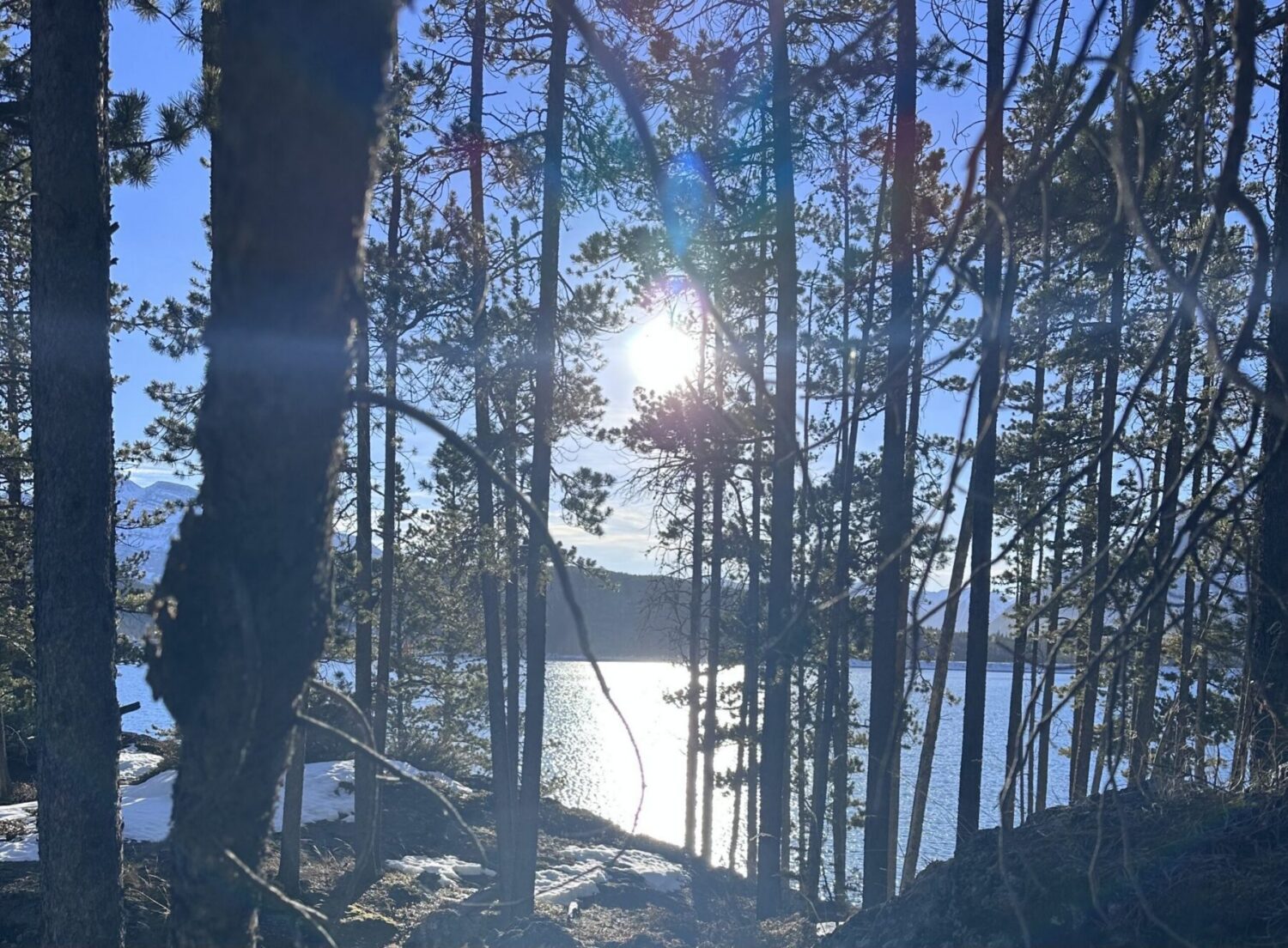
Photo by Julie deBoer
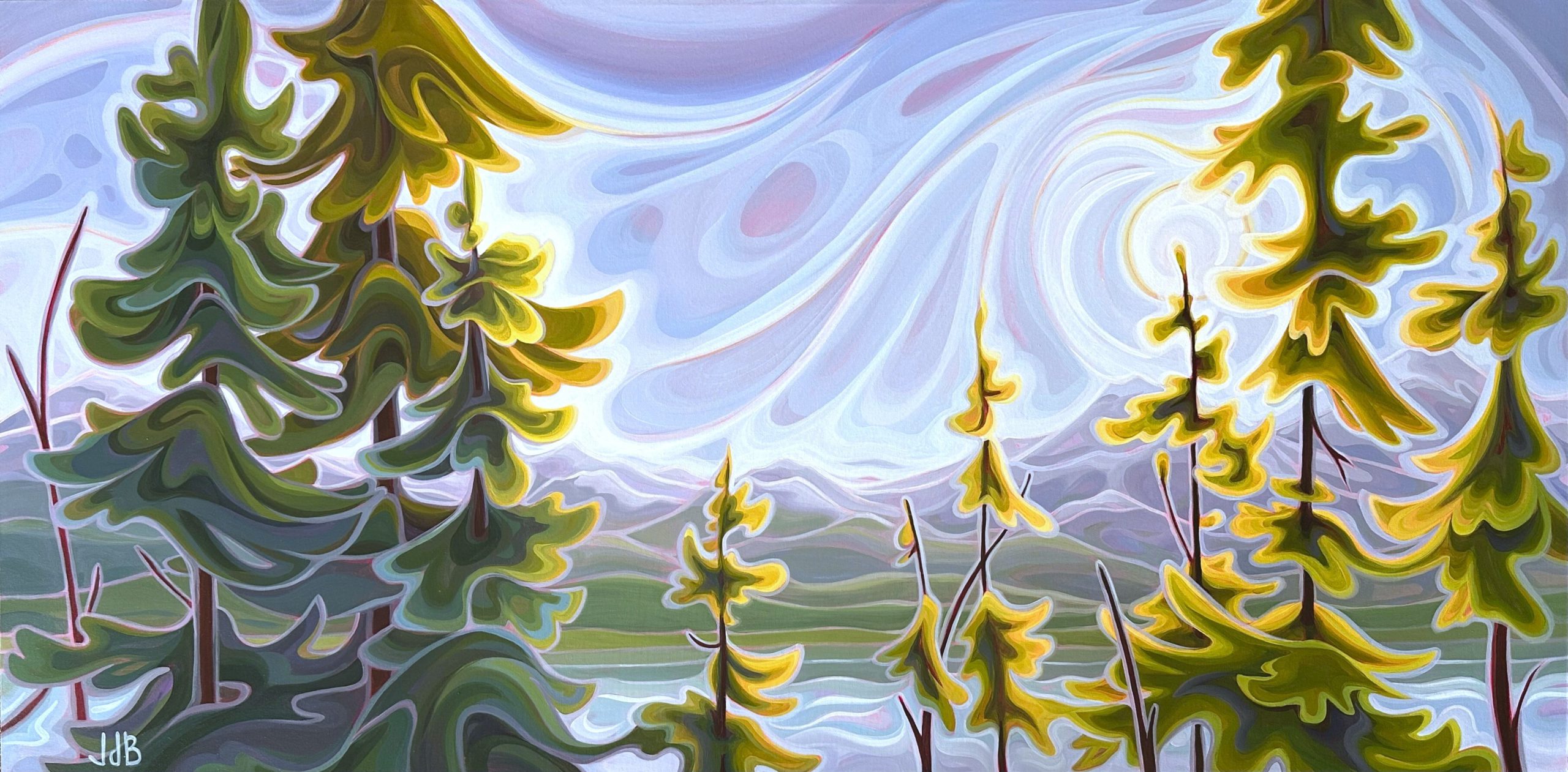
“In All Our Glory” by mentor Julie deBoer
Here’s a great example. Above is a reference photo I took while hiking the Rocky Mountains that inspired my painting “In All Our Glory” (above) I wanted to capture the sun-kissed trees caught in the light. The trees are the “stars of the show”, the soft bright atmosphere of the glorious day are secondary. There’s a deeper meaning to this piece for me, but I like to leave the narrative wide open to interpretation.
That said, you can see I only used the reference photo as a “springboard” to launch from. It’s something I help artists learn to do in my mentorship group, because perfectionism and over-thinking are common struggles that can result from reliance on reference photos. I get it, because I’ve been there!
Capture What the Photo Missed
Reference photos provide information, but you provide the interpretation, emotion, and story. A photo should never steer the ship; it should simply help you gather the information you need.
One helpful approach is to study the photo carefully and observe the relationships between shapes, values, and light. Then set the photo aside so your artwork can grow beyond what the camera captured.
It’s also important to remember that you are free to move, delete, or add elements with intention. You do not have to use the reference exactly as it appears.
Your vision is paramount and your story matters.
Finally, simplify the scene whenever possible. Reference photos often contain visual clutter that doesn’t add value to the composition. Remove unnecessary elements to allow your artwork to breathe and give your story greater clarity.
Study the Decisions Great Artists Make
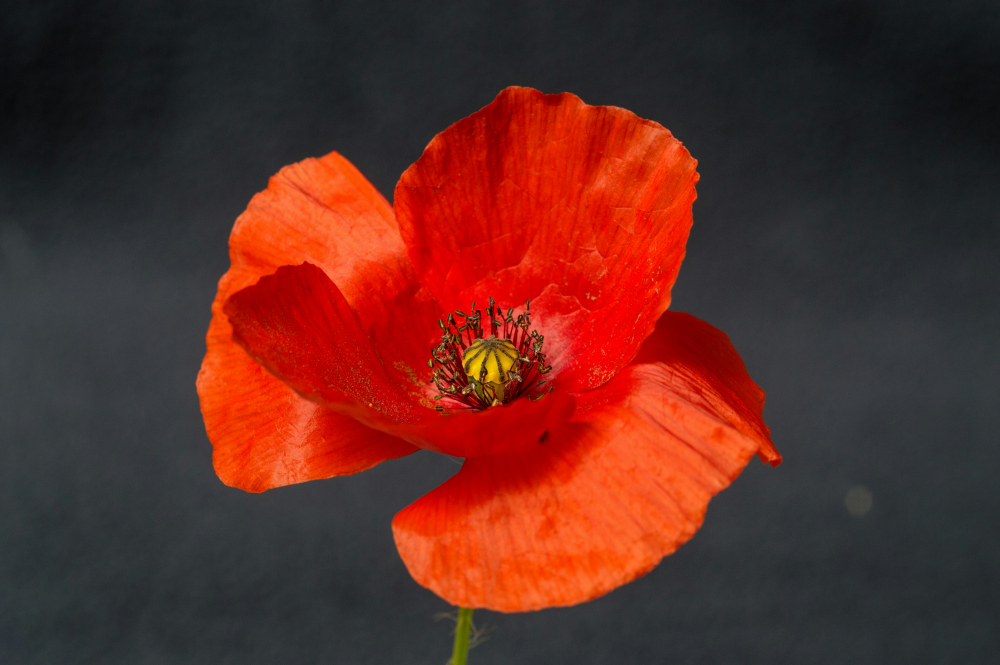
Photo by Eduardo Goody on Unsplash
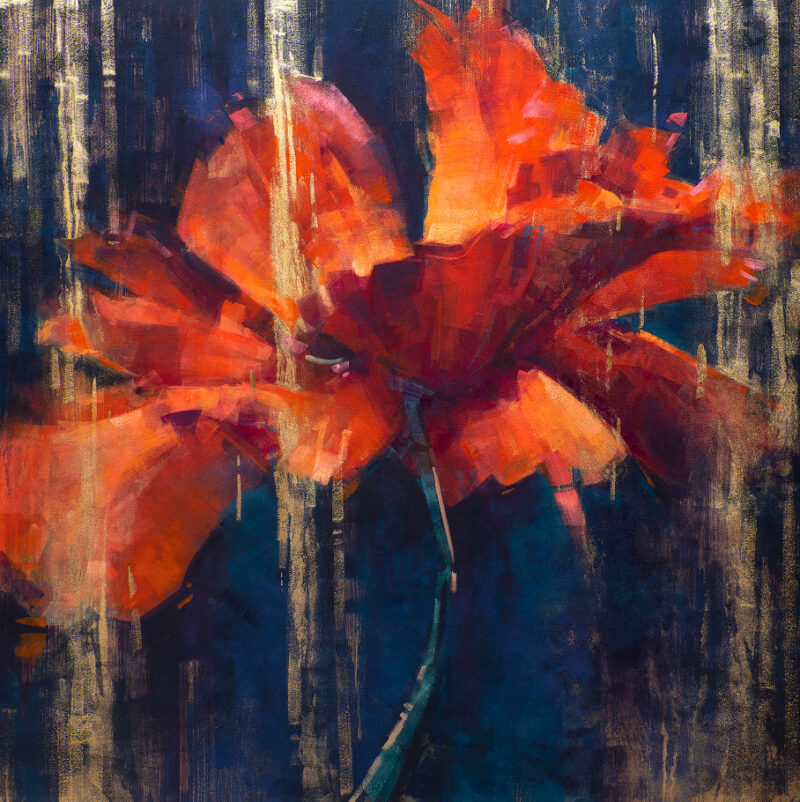
“Gilded Summer” by mentor Whitney Hall
Consider Whitney Hall’s painting “Gilded Summer.” The subject is simple (a single poppy) yet the painting is rich, complex, and emotionally charged.
When you look at a painting like this, pause and ask yourself a few questions.
- What emotion does it stir-up in you?
- Where does your eye go first?
- How did the artist capture and hold your attention?
The reference photo is one I found online to make a point. Art can go further than reality. Lean into your ARTISTIC FREEDOM and push the limits. And remember, “accuracy” is not the goal.
Great art rarely comes from copying what exists.
Instead, it emerges from thoughtful decisions about what to include, what to simplify, what to emphasize.
Become a Curious Observer
One of the best ways to loosen the grip of reference photos is to train your eye through observation. Work from life whenever you can and make a habit of noticing the subtle details that photos often miss.
Pay attention to color shifts in natural light, the softness or sharpness of edges, the shapes and colors of shadows, and the atmosphere of the environment around you. When you observe carefully from life, you begin to understand what photos leave out.
Ask “Why?” About Every Element
Whenever you include something from your reference photo, ask yourself one simple question: why is it there?
Does it support the story you’re trying to tell? Does it strengthen the composition or guide the viewer’s eye? If in doubt, take it out. Simplifying a scene can often make the painting far more powerful.
Start With Thumbnails
Before committing to a final composition, try creating several quick thumbnail sketches. Move elements around, test different placements, and experiment with balance and scale.
Don’t settle for the first arrangement that comes to mind. You might be surprised by how many compelling compositions can emerge from a single reference photo when you give yourself the freedom to explore.
Want to learn how to simplify your reference photos to tell one unique story? CLICK HERE to check out mentor Sharon Lynn Williams’ on-demand course.
Remember the Big Picture
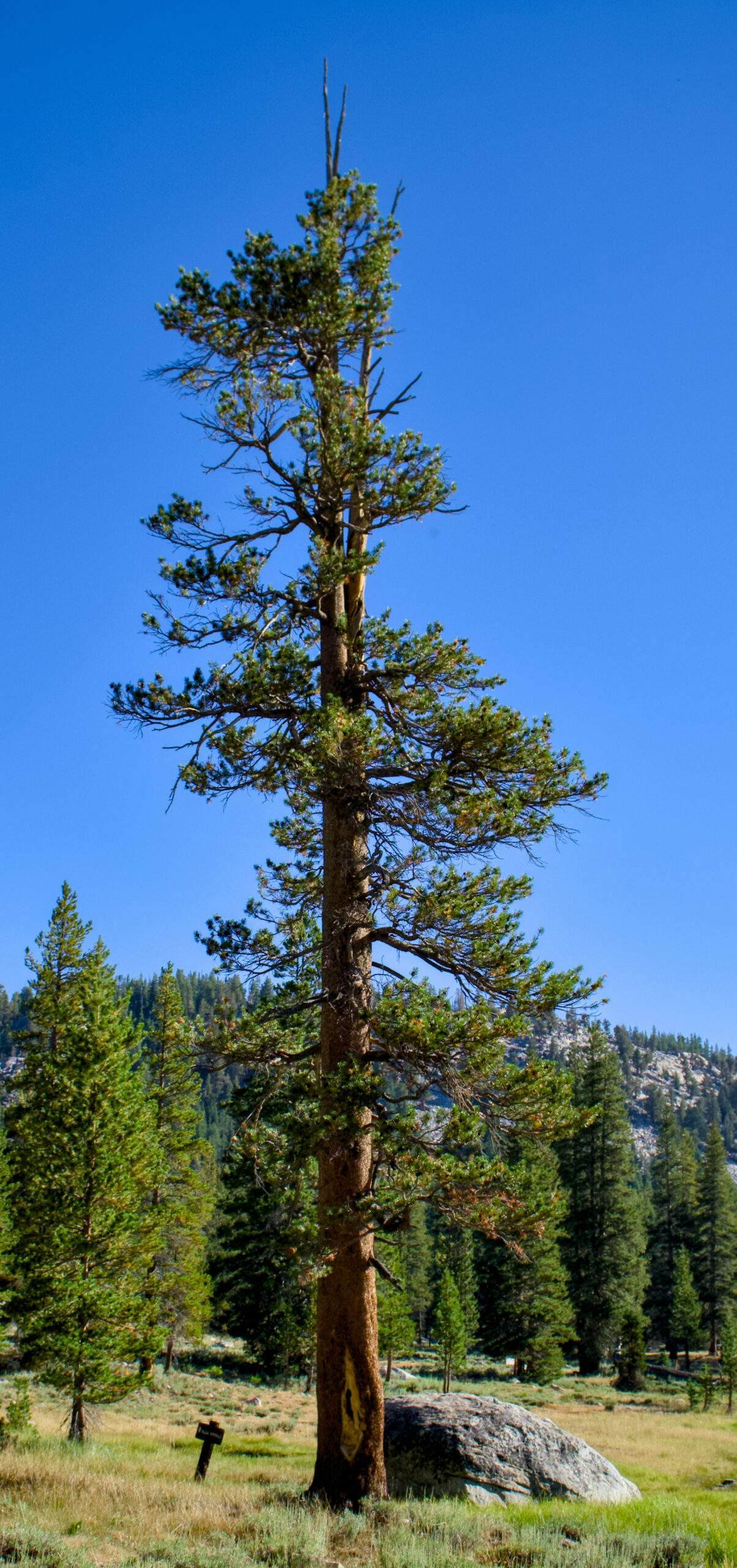
Photo by Spencer DeMera on Unsplash
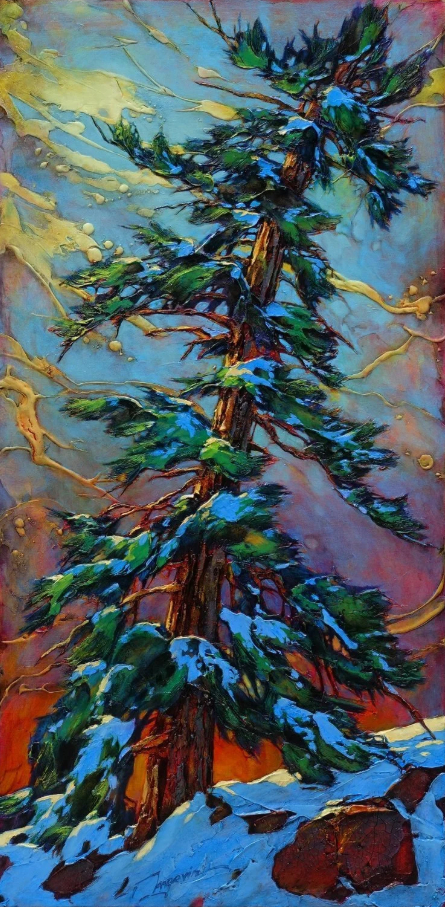
“Strange Weather” by mentor David Langevin
Study artists who convey emotion through their brushstrokes, color choices, and thoughtful compositions. None of them were born with the talent required to create the work we admire. Their skill came from years of practice, experimentation, disciplined learning, and an ongoing pursuit of growth and development.
David Langevin’s tree portrait above is a great example of the outcome of decades of practice. The reference photo I included is not the one he used (if he even used one) it’s one I found online to make a point. Consider the differences between the two. David’s painting of a tree has character, it’s energetic, and has presence…it’s personified!
No reference photo on the planet can do that. Only an artist can.
The heart, life, and story of your art comes from you. That’s what sets your work apart and makes it uniquely yours.
Art is an outlet to express yourself, tell stories, share memories, and help people feel something deeply.
It’s a gift to the world. And you’re the giver of it.
Lean into the privilege of being a creator with confidence. Share your passion, your perspective, your interpretation, and your story with the world.
With you,
Julie deBoer
Artist & Founder
13 Comments
Submit a Comment
How To create better art, faster, and with more joy…
Join a highly vetted Master Artist in Small Group Mentorship
Our Masters can see what you can’t yet. Get personalized feedback and critiques.
Choose from 180+ professional artist mentors excited to help you get to where you want to be.
Connect with like-minded artists in a non-competitive space.
Regular sessions and accountability keep you on track.
Save on art supplies, courses, and access live weekly events hosted by our Masters.
Join 100% RISK-FREE and cancel anytime.
Groups fill fast with LIMITED SPOTS. Don’t wait to find your Master Artist mentor.
Click below for full details and to view our roster of successful mentors making a living from their art.


Get Our Weekly Newsletter
Mastrius helps motivated artists accelerate their journey by combining live interactive mentorship with trusted community.
No artwork, or images of artwork, on this website may be copied or otherwise reproduced without the prior written consent of both Mastrius Marketplace, Inc., and the work’s original creator. This includes reproduction with distortion or other alteration of the work. Refer to the Canadian Copyright Act for governing legislation.
© 2023 Mastrius Marketplace Inc. | All Rights Reserved | Privacy Policy | Terms of Use | Cancellation & Refund Policy
Great examples of not copying but interpreting 😎
Dear Julie,
This was an amazing article for me. Such great examples and works you have chosen. It absolutely stopped me in my tracks. Thank you for sharing.
Sincerely, ELlen Jean Diederich
Thanks Ellen, I appreciate that. I’m glad it was helpful, I could have had a thousand examples, hard to choose just a few. 🙂
Thank you Carol!
Thanks Julie. I needed to hear this and be reminded. Great examples.
You’re so welcome Ingrid
Excellent, Julie!
Thanks Sue!
Thanks for a great article. Looking back at my best paintings it’s obvious that the personal photos were the best to use. Also I often use a quick plein air study to make a bigger piece.
Yes, but what if you like to paint the things the way you see them? I don’t want to modify them into weird shapes and crazy colours, That’s not my style.
Then more power to you! There’s nothing wrong with realism, as long as you feel freedom as an artist, you’re not struggling with perfectionism, and you love what you’re doing.
Thankyou Julie, This is a very helpful article.
Glad you found it helpful!